Leatherwood Honey Benefits: Taste, Health & Tasmania’s Rarest Honey
Beyond the Jar: A Scientific Fingerprint
Most consumers know Leatherwood honey for its piquant, floral aroma. However, in the scientific community, it is prized for something far more significant: its chemical “fingerprint.” Unlike many floral honeys that rely solely on hydrogen peroxide for their antibacterial properties, Tasmanian Leatherwood contains a rare bioactive compound recently identified by researchers as 4-Methoxymandelic acid (4-MMA).
At Frogmouth Ponds, our cold-extraction process is designed specifically to protect these delicate molecular structures from the moment the bees cap the hive in the Tasmanian wilderness to the moment the jar reaches your table.
The Breakthrough: 4-Methoxymandelic Acid (4-MMA)
For decades, scientists searched for the exact compound that made Leatherwood unique. Recent breakthrough research from the University of Tasmania (UTAS) has finally identified 4-MMA as the primary biomarker. This compound isn’t just a label of authenticity; it is a powerful antioxidant that contributes to the honey’s functional health benefits.
-
The Science: 4-MMA is found in significantly high concentrations in authentic Leatherwood honey, serving as a “molecular signature” that cannot be faked.
-
Read the Research: Research reveals what makes Tasmanian leatherwood honey so unique (University of Tasmania)
Leatherwood vs. Manuka: The Bioactive Comparison
| Feature | Tasmanian Leatherwood | Manuka (NZ/AU) | The Science Behind It |
| Primary Bioactive | 4-MMA | Methylglyoxal (MGO) | 4-MMA is a potent antioxidant marker unique to Leatherwood. |
| Antioxidant Level | High (up to 7.25 μmol/g) | High | Leatherwood’s phenolic profile rivals medicinal Manuka. |
| Flavor Profile | Floral, Spicy, Piquant | Earthy, Medicinal, Bitter | Bioactivity without the medicinal bitterness. |
| Digestive Support | High (Prebiotic) | Moderate | Phenolics in Leatherwood support a healthy gut microbiome. |
-
Read the Research: 4-Methoxymandelic acid: A leatherwood honey marker for authentication (PMC)
Why Cold-Extraction is Non-Negotiable
The bioactivity of honey is volatile. The enzymes and phenolic acids that give Leatherwood its “superfood” status are highly sensitive to heat. Many commercial packers heat their honey to over 60°C to speed up bottling, but science shows this is a mistake.
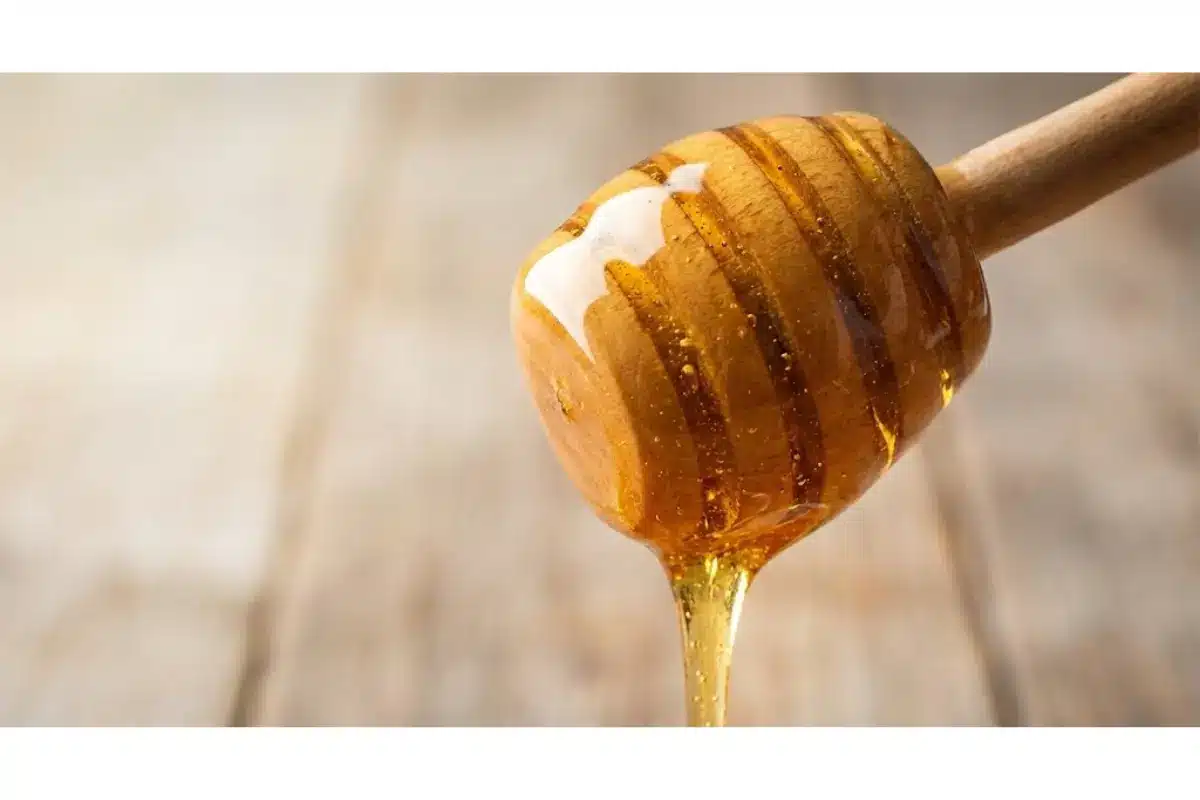
At Frogmouth Ponds, we never heat our honey above hive temperatures (approx. 35°C). By maintaining this “Cold-Extracted” standard, we ensure that the antioxidant capacity and enzymatic activity remain at peak levels.
-
The Fact: Thermal treatment significantly reduces the biological activity and antioxidant power of raw honey.
-
Read the Research: Effect of thermal treatment on honey quality and antioxidant properties (PMC)
Conclusion: Experience the Science of Port Sorell
Leatherwood honey is more than a culinary delight; it is a prehistoric superfood supported by modern laboratory analysis. When you choose Frogmouth Ponds, you are choosing a honey that respects the molecular complexity of the Tasmanian rainforest.
Experience the Harvest
-
Shop the Science: View our 100% Raw Leatherwood Range
-
Learn the Craft: Want to see these enzymes in action? Join our next Beginner Beekeeping Course Tasmania to see how we harvest for health.
How rare is Leatherwood honey?
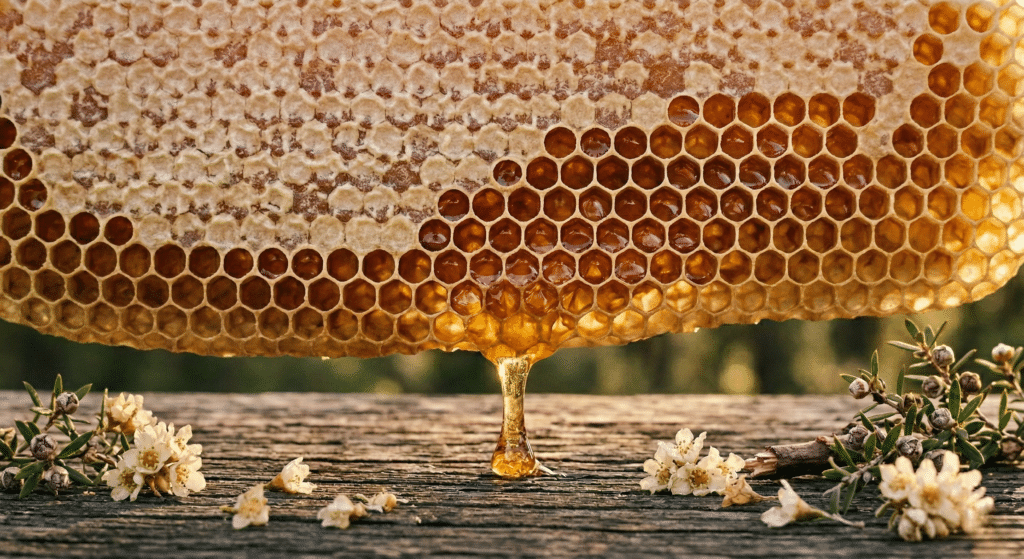
Leatherwood honey is one of the rarest honeys on earth — less than 0.01% of the world’s honey. It comes from a single tree, the Leatherwood (Eucryphia lucida), which grows nowhere else but Tasmania’s south-west wilderness.
Where it comes from
The Leatherwood is endemic to Tasmania’s remote World Heritage rainforest. The trees are slow growing — they can live for 300 years, but don’t flower until they’re 70 to 90 years old. The best stands sit deep in the wilderness, reached only on foot or by helicopter, so only a handful of beekeepers can work them.
Why there’s so little
Even a mature tree flowers for just 6 to 8 weeks, between January and March. Miss that window and there’s no honey until the next season — and cool, wet Tasmanian weather can cut the flowering shorter still. You can’t plant your way to more: the trees take a lifetime to mature and only grow wild, in limited pockets of old forest. That’s why genuine Leatherwood stays scarce.
What does Leatherwood honey taste like?
Leatherwood is floral and aromatic, with a gentle spice and a smooth, creamy finish. It opens with delicate white-flower notes, moves through hints of cinnamon and vanilla, and finishes clean — sweet without being cloying. It’s a honey to enjoy for its own sake: by the spoonful, or over good cheese.
Leatherwood vs Manuka, on taste
Manuka is medicinal and earthy — a honey many people take for wellness rather than pleasure. Leatherwood is the opposite: it’s made to be enjoyed. And where Manuka is now produced across New Zealand and Australia at scale, Leatherwood comes from one island, one tree and one short season — which makes it genuinely rarer.
How to use Leatherwood honey
Leatherwood is best enjoyed gently — heat and strong flavours mask what makes it special. A few of our favourite ways:
- Straight from the spoon — let it warm on the palate and taste the florals, the spice and the clean finish. A small spoonful in the morning makes a lovely ritual.
- With cheese — pair it with aged cheddar, blue, brie or a sharp parmesan. The floral notes lift salty, rich cheeses beautifully.
- In yoghurt — swirl it through Greek yoghurt with walnuts and berries for a simple, nourishing breakfast.
- In cold drinks — lovely in a whisky sour or a gin cocktail, or over vanilla ice cream. Keep it to drinks served cold or at room temperature.
- Gentle heat only — if you cook with it, add it at the end. Above about 40°C the delicate enzymes and aromatics begin to break down, so save the Leatherwood for finishing and use an everyday honey for baking and hot drinks.