Why Tasmanian Leatherwood Honey Is the World’s Rarest
Tasmanian Leatherwood honey comes from a tree species that exists nowhere else on Earth, blooms for just 6-8 weeks annually, and grows only in Tasmania’s remote southwest wilderness. This combination of extreme geographic isolation, fleeting flowering windows, and ancient forest origins makes it one of the planet’s genuinely rarest honeys—representing less than 0.01% of global honey production.
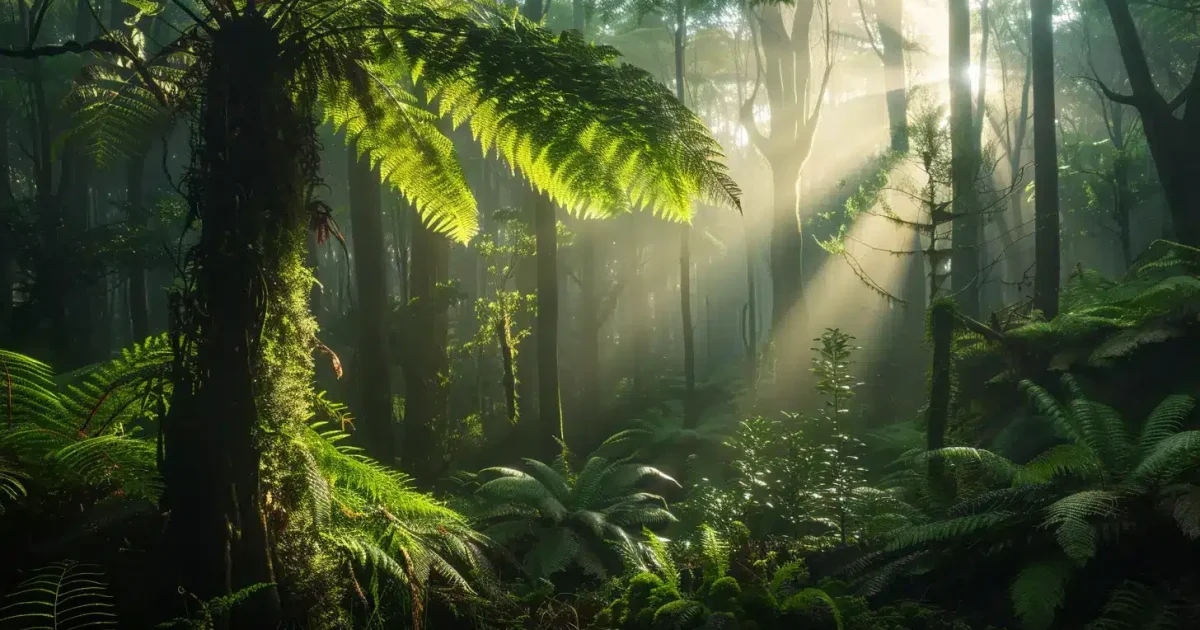
Deep in Tasmania’s ancient rainforests, where mist clings to tree ferns older than European settlement, a botanical marvel blooms for just six weeks each year. The Leatherwood tree (Eucryphia lucida) exists nowhere else on Earth, and the honey it yields has become one of the most sought-after—and genuinely rare—honeys in the world.
If you’ve only ever tasted supermarket honey, prepare to recalibrate what you thought honey could be.
What Makes Leatherwood Honey So Rare?
Where Does Leatherwood Honey Come From?
Leatherwood (Eucryphia lucida) is endemic to Tasmania’s remote southwest wilderness—a UNESCO World Heritage region of temperate rainforest that’s remained largely unchanged for millennia. These slow-growing trees can live for 300 years, but they only begin flowering after reaching 70-90 years of age. The species evolved in isolation on this island, protected by Bass Strait from mainland Australia, creating a honey source that simply cannot be replicated anywhere else on the planet.
The best Leatherwood groves grow in Tasmania’s southwest wilderness, accessible only by helicopter or days of bushwalking. This remoteness has protected the species from agricultural development but makes beekeeping an expedition-level undertaking. Only a handful of beekeepers can access these pristine sites, and they do so with deep respect for the fragile ecosystem that has nurtured these trees for thousands of years.
The terrain itself presents formidable challenges—steep valleys, unpredictable weather, and dense undergrowth that can take hours to navigate. Beekeepers must time their hive placements perfectly, often camping in the wilderness for weeks during the brief flowering season. This isn’t industrial honey production; it’s a careful collaboration with one of Earth’s last truly wild places.
Why Is Leatherwood Honey Produced in Such Small Quantities?
Even when mature, Leatherwood blooms for a mere 6-8 weeks between January and March. Miss that narrow window, and there’s no honey until next year. Weather conditions—frequent rain and cool temperatures in Tasmania’s unpredictable climate—can further reduce the flowering period or make it impossible for bees to forage during crucial days.
Unlike clover or orange blossom that can be cultivated across vast agricultural areas, Leatherwood grows wild in limited pockets of ancient forest. You cannot plant more trees and expect honey in a few years—these trees take human lifetimes to mature. The flowering intensity also varies dramatically year to year, depending on temperature, rainfall, and complex ecological factors scientists are still working to understand.
The result? A honey so limited in production that it represents less than 0.01% of global honey output. When you consider that a single mature Leatherwood tree might only produce enough nectar for a few kilograms of honey annually, the mathematics of scarcity become clear. This isn’t marketing hype—it’s botanical reality.
What Are the Health Benefits of Leatherwood Honey?
Leatherwood honey isn’t just rare—it’s biochemically distinctive. The ancient forest ecosystem from which it originates has created a honey with a unique chemical signature that researchers are only beginning to understand. Unlike monofloral honeys from agricultural landscapes, Leatherwood honey carries the complexity of a wilderness that predates human civilization.
Recent research has identified 4-methoxyacetophenone (4-MMA) as a signature bioactive compound in Leatherwood honey. This naturally occurring phenolic compound contributes to the honey’s antioxidant capacity and potential antimicrobial properties. Studies suggest that 4-MMA may work synergistically with other compounds in the honey to provide health benefits that isolated compounds cannot replicate.
While Manuka honey has been heavily marketed for its methylglyoxal (MGO) content, Leatherwood honey offers a different bioactive profile—one that’s only beginning to be understood by researchers. Early studies suggest impressive antioxidant activity, comparable to or exceeding that of Manuka in certain measures. The honey also contains high polyphenol content from the ancient forest ecosystem, natural enzymes preserved through minimal processing, and unique flavonoid profiles not found in other honey varieties.
How Does Leatherwood Honey Compare to Manuka?
Let’s address the elephant in the room: how does Leatherwood stack up against the heavily marketed Manuka? Both are premium honeys with devoted followings, but they offer fundamentally different experiences. Understanding these differences helps you appreciate what makes Leatherwood truly special.
What Does Leatherwood Honey Taste Like?
Manuka is medicinal, earthy, sometimes divisive—a honey you take for wellness, not necessarily pleasure. Its strong, almost antiseptic flavour has a purpose, but it’s not what most people reach for when they want to enjoy honey as a food. Many Manuka enthusiasts admit they tolerate rather than savour the taste.
Leatherwood is transcendent: floral with subtle spice notes, a creamy texture, and a complex finish that lingers. It’s a honey you’d drizzle over artisan cheese or savour by the spoonful. The flavour opens with delicate white flowers, develops into hints of cinnamon and vanilla, and finishes clean without cloying sweetness.
Professional tasters describe Leatherwood as having “perfumed” qualities—not artificial or overwhelming, but genuinely aromatic in the way fine wine carries the terroir of its vineyard. This is honey that deserves to be tasted, not masked in recipes or hot beverages that would destroy its subtle complexity.
Which Is Rarer: Leatherwood or Manuka Honey?
Manuka is produced across New Zealand and parts of Australia, with thousands of commercial operations. While genuine high-grade Manuka is valuable, production has scaled significantly over the past two decades. You can find Manuka honey in supermarkets worldwide, with varying grades and price points to suit different markets.
Leatherwood comes from one small island, one tree species, one brief window each year. There is no scaling this production without fundamentally changing what makes it special. The trees cannot be cultivated outside their native habitat, and even within Tasmania, only specific microclimates support healthy Leatherwood forests.
Both command premium prices, but Leatherwood’s extreme scarcity makes it harder to source from ethical, verified producers. When a honey can only come from one place on Earth, and that place produces limited quantities annually, the supply-demand equation creates genuine rarity rather than marketing-manufactured exclusivity.

How Should You Use Leatherwood Honey?
This isn’t a honey to hide in tea or baking. Leatherwood deserves to be tasted, not masked. The delicate bioactive compounds and complex flavour profile that make this honey special are easily destroyed by heat or overwhelmed by strong flavours.
Straight from the Spoon
The purist’s approach lets you experience everything this honey offers. Let it coat your palate slowly, warming to body temperature as it spreads. Notice the floral opening, the subtle spice mid-note, the clean finish that doesn’t leave your mouth feeling sticky.
Many people discover they actually prefer raw, high-quality honey consumed this way rather than as a sweetener. A small spoonful in the morning becomes a ritual—a moment of genuine pleasure and connection to the Tasmanian wilderness. The creamy texture of cold-extracted Leatherwood makes this particularly satisfying.
Start with a quarter teaspoon if you’re new to tasting honey this way. The intensity and complexity can be surprising when you’re accustomed to bland commercial honey that tastes primarily of sugar.
With Artisan Cheese
Pair Leatherwood with aged cheddar, blue cheese, or creamy brie on a cheese board. The honey’s complexity matches strong flavours without overpowering them. The floral notes complement salty, umami-rich cheeses beautifully, creating flavour combinations that neither ingredient achieves alone.
Try it with a sharp, crystalline Parmigiano-Reggiano—the honey’s smoothness contrasts with the cheese’s granular texture. Or drizzle it over soft goat cheese with cracked black pepper and crusty bread. These pairings showcase how versatile Leatherwood can be when treated as a gourmet ingredient rather than just a sweetener.
Cheese and honey boards have become popular for good reason, but most use mediocre honey that adds only sweetness. Leatherwood elevates the entire experience, turning a simple appetizer into something memorable.
Morning Ritual
A spoonful in Greek yoghurt with walnuts and fresh berries creates a breakfast that’s simple, nourishing, and memorable. The honey doesn’t need to be stirred completely—let it pool and swirl through the yoghurt so each bite offers different intensities of sweetness and flavour.
The probiotics in good yoghurt complement the prebiotic qualities of raw honey, creating a genuinely functional food that also happens to taste extraordinary. Add a sprinkle of cinnamon or cardamom if you want to enhance the honey’s natural spice notes.
This combination provides sustained energy without the blood sugar spike of typical breakfast foods. The protein, healthy fats, and complex sugars work together to keep you satisfied through the morning.
Cocktails and Spirits
Mixologists prize Leatherwood for whiskey sours, gin cocktails, or simply drizzled over vanilla ice cream with a splash of single malt. The honey’s floral complexity adds depth to cocktails without the one-dimensional sweetness of simple syrup. It plays particularly well with botanical spirits that echo the forest origins of the honey itself.
Try a Leatherwood honey and lemon cocktail with Tasmanian gin for a drink that tastes entirely of place. Or use it to sweeten an Old Fashioned, where it complements the whiskey’s oak and vanilla notes. Even a simple honey and soda water with fresh lime becomes something special.
The key is using the honey in drinks served cold or at room temperature. Hot toddies might be traditional, but they sacrifice the very qualities that make Leatherwood worth its premium price.
Gentle Heat Only
If you must use Leatherwood in cooking, add it at the end of the process. High heat destroys the delicate enzymes and bioactive compounds that make this honey special. Temperatures above 40°C (104°F) begin degrading the beneficial properties, and anything approaching boiling essentially turns your rare Leatherwood into expensive sugar syrup.
Use it as a finishing glaze for roasted vegetables or grilled meats, applied after they come off the heat. Drizzle it over baked desserts just before serving rather than incorporating it into the batter. Think of it as a condiment to be applied fresh, not an ingredient to be transformed by cooking.
If you want honey for baking or hot beverages, use a less precious variety and save your Leatherwood for applications that let it shine. This isn’t snobbery—it’s simply respecting what makes this honey worth seeking in the first place.

What Is Cold-Extracted Leatherwood Honey?
Not all Leatherwood honey is created equal. The extraction and processing method profoundly affects the final product’s flavour, bioactive content, and overall quality. Understanding these differences helps you identify truly exceptional honey.
Many commercial operations heat honey to 40-60°C (104-140°F) to make it easier to filter and bottle—a process that destroys enzymes, diminishes bioactive compounds, and flattens flavour. Heating also speeds up crystallization and can create off-flavours that mask the honey’s natural character. Some producers heat even higher to prevent crystallization entirely, creating honey that looks clear and pours easily but has lost much of what made it valuable.
Cold extraction preserves everything that makes Leatherwood honey special. The honey is extracted at hive temperature (typically around 35°C or 95°F) and never heated beyond that point. This slower, more labour-intensive process maintains the full spectrum of enzymes, pollen, propolis, and bioactive compounds that give raw honey its health properties and complex flavour.
Frogmouth Ponds uses cold extraction exclusively. Our honey is never heated above hive temperature, minimally filtered to preserve pollen and propolis, harvested from verified wilderness Leatherwood sites, and traceable to specific harvest dates and locations. Each jar represents a specific moment in Tasmania’s ancient forest—a taste of something truly wild, truly rare.
Your Invitation to Taste the Wilderness
Leatherwood honey isn’t an everyday staple. It’s a connection to one of Earth’s last temperate rainforests, a flavour that exists nowhere else, and a reminder that true rarity still exists in our industrialized world. In an age of globalized food systems where the same products appear on shelves worldwide, Leatherwood remains stubbornly local, irreducibly wild.
Experience Frogmouth Ponds’ latest cold-extracted Leatherwood harvest—limited quantities from the 2024 season. Each jar is numbered and traceable to the specific forest site and harvest date, ensuring you receive honey that represents the pinnacle of what Tasmania’s wilderness can offer. We work with beekeepers who access the most remote Leatherwood stands, where the trees have never known pesticides, pollution, or agricultural runoff.
Once this harvest is gone, you’ll wait another year. Some things can’t be rushed, replicated, or scaled. That’s exactly what makes them worth seeking.
Tasmanian Leatherwood honey represents something increasingly rare in our modern world—a food that cannot be industrialized, replicated, or scaled beyond its natural limits. From the ancient trees that take human lifetimes to mature, through the brief flowering window each summer, to the handful of beekeepers who venture into Tasmania’s remote wilderness, every aspect of Leatherwood honey production speaks to scarcity, patience, and respect for wild places. Whether you’re drawn by the unique 4-MMA bioactive compounds, the transcendent flavour that surpasses even premium Manuka, or simply the desire to taste something genuinely rare, Leatherwood offers an experience that no other honey can match. Explore our full Tasmanian honey range and discover why this honey has captivated those fortunate enough to taste it—before this year’s limited supply is gone.
