Why Does Honey Crystallise (and Is It Still Good to Eat?)
Understand the natural process behind crystallised honey, why it’s actually a sign of quality, and how to enjoy it in any form.
One of the most common questions we receive at Frogmouth Ponds is about crystallised honey. If you’ve opened a jar of honey only to find it solid or grainy, you might assume something has gone wrong. In fact, the opposite is true. Crystallisation is a natural, inevitable process that signals quality honey with minimal processing. Let’s explore what’s happening in your jar and why it’s nothing to worry about.
What Is Honey Crystallisation?
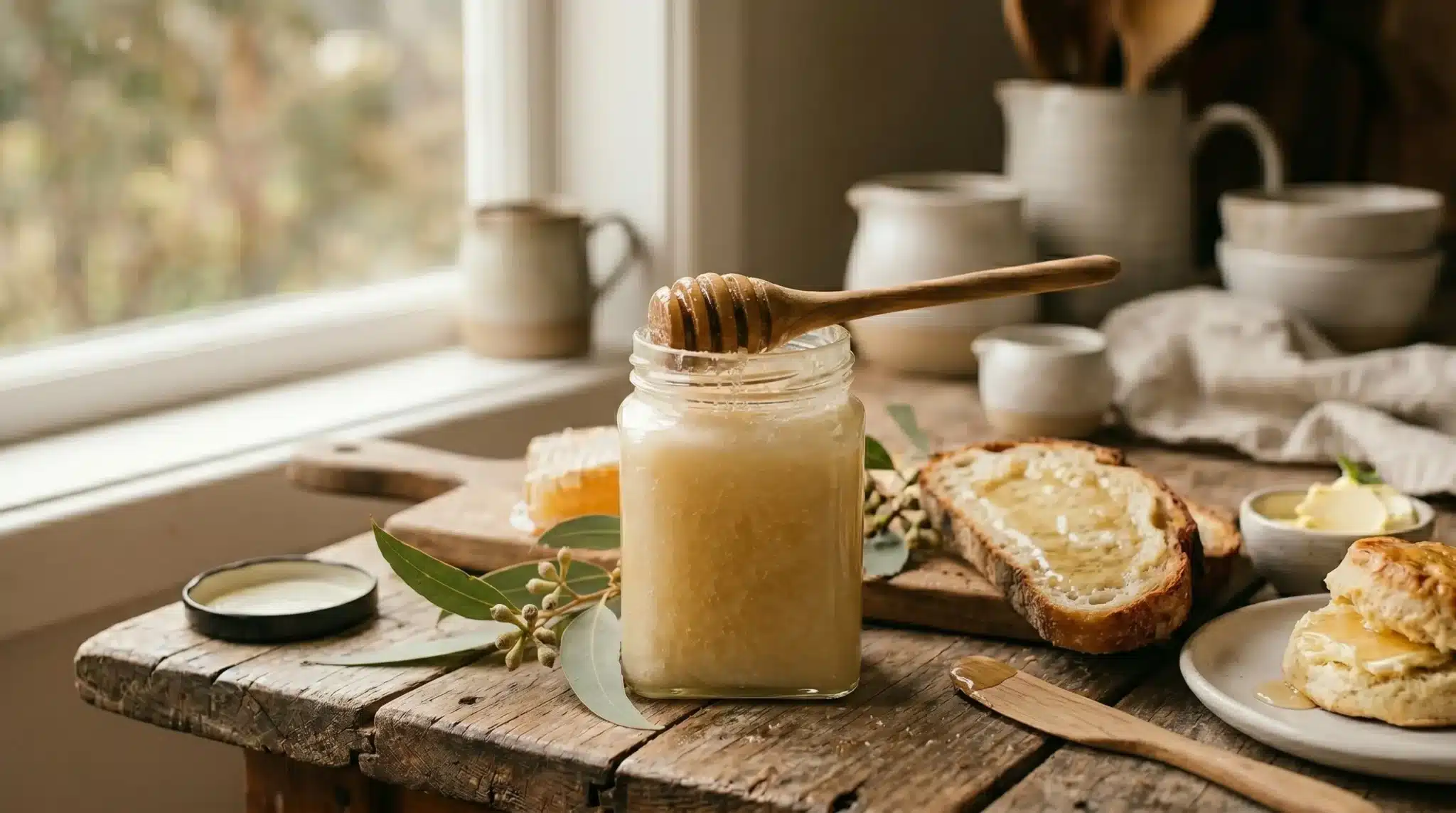
Honey crystallisation is the process where honey transforms from a liquid into a solid or semi-solid state. This isn’t mould, spoilage, or a sign of age — it’s simply a natural phase transition. Pure honey contains two primary sugars: glucose and fructose. When conditions are right, the glucose molecules begin to cluster together and form crystals, giving the honey a creamy, grainy, or completely solid texture depending on the crystal size.
The rate and texture of crystallisation depends largely on the ratio of glucose to fructose in different honey varieties. Honeys with higher glucose content crystallise faster, whilst those with higher fructose content remain liquid for longer. This is why you might notice your raw Leatherwood honey crystallising at a different rate than clover or blue gum varieties.
Why Does Honey Crystallise?
Crystallisation happens because honey is a supersaturated solution. When honey is first extracted, it contains more dissolved sugar than water can normally hold at room temperature. Over time, the glucose naturally seeks to return to a stable state by forming crystals. This process is accelerated by:
- Temperature — Most honey crystallises fastest between 13°C and 17°C
- Pollen content — Tiny pollen particles act as nucleation points for crystal formation
- Sugar composition — The glucose-to-fructose ratio determines crystallisation speed
- Storage conditions — Cooler pantries encourage faster crystallisation than warm kitchens
- Minimal processing — Raw and lightly processed honeys crystallise faster because they retain natural pollen and minerals
In fact, fast crystallisation is a sign of quality honey. Commercial producers often heat and filter honey aggressively to keep it liquid for longer, removing beneficial pollen and enzymes in the process. When your Frogmouth Ponds honey crystallises, it’s telling you that it’s been handled with care and retains its natural nutritional profile.
“Crystallisation is not a defect—it’s proof of authenticity. The purer the honey, the more likely it will crystallise.”
Why Different Honeys Crystallise at Different Rates
Not all honey crystallises at the same pace. Here at Frogmouth Ponds, we produce three varieties, each with its own crystallisation signature:
Leatherwood Honey
Our Leatherwood honey, sourced from the unique Tasmanian rainforest, tends to crystallise relatively slowly due to its higher fructose content. This honey may remain liquid for months in a cool pantry, though it will eventually crystallise into fine, creamy crystals. The slower crystallisation is part of what makes Leatherwood so prized by honey connoisseurs.
Clover Honey
Clover honey crystallises more readily, often within weeks of bottling. This is because clover nectar produces honey with a higher glucose content. Many people prefer clover honey in its crystallised form, as the fine crystals make it perfect for spreading directly onto toast or stirring into tea without the stickiness of liquid honey.
Blue Gum Honey
Blue gum honey sits somewhere in the middle, with moderate crystallisation. Its complex floral profile becomes even more nuanced as it crystallises, developing a smooth, almost butter-like texture that some find utterly irresistible.
How to Gently Warm Crystallised Honey
If you prefer your honey in liquid form, the good news is that crystallisation is completely reversible. The key is to warm it gently — never hot. Here’s the proper method:
- Water bath method: Place your unopened jar in a bowl of warm (not hot) water. Replace the water every 10 minutes or so until the honey returns to liquid form. Never exceed 45°C (113°F).
- Gradual warming: Leave your jar on a sunny windowsill for a few days. The gentle heat will slowly liquify the honey whilst preserving its enzymes and beneficial compounds.
- Room temperature patience: If your home is warm enough, simply leaving the jar out of the pantry will eventually liquify crystallised honey.
Why the 45°C limit? Honey contains heat-sensitive enzymes and beneficial compounds. Heating above 45°C can damage these elements and diminish the nutritional benefits that make raw honey so special. Never microwave honey or use boiling water, as extreme heat destroys the very qualities you’re paying for.
Why Some People Prefer Crystallised Honey
Whilst many assume liquid honey is always preferable, crystallised honey has distinct advantages:
Easier Portioning
Crystallised honey doesn’t drip or run. You can easily scoop out exactly what you need without the mess of chasing a runny jar around your kitchen.
Perfect for Spreading
Creamy, crystallised honey spreads beautifully on toast, scones, and pastries. The texture is reminiscent of clotted cream or butter, making it ideal for breakfast spreads.
Better for Baking
Some bakers prefer crystallised honey because it’s easier to measure accurately and can be incorporated into doughs and batters with less mess.
It Tastes the Same
This bears repeating: crystallisation does not change the taste of honey. Rewarmed or naturally crystallised, your Frogmouth Ponds honey tastes exactly as it should.
Frequently Asked Questions
Is crystallised honey still safe to eat?
Absolutely. Crystallised honey is completely safe and often preferred by those seeking unprocessed, quality honey. It’s not spoiled or contaminated—it’s simply a natural state. As long as your honey hasn’t been contaminated, it will never spoil, whether crystallised or liquid.
Can I prevent my honey from crystallising?
Commercial producers prevent crystallisation through aggressive heating and filtration, but this removes pollen and beneficial enzymes. If you want raw, nutrient-rich honey from Frogmouth Ponds, you’ll need to accept that crystallisation is part of the natural journey. The best way to slow it is simply to store your honey in a slightly warmer location (above 20°C) or to embrace it and enjoy the creamy texture.
Does honey ever actually go bad?
Honey is one of the few foods that never spoils when stored properly. Archaeologists have found pots of honey in Egyptian tombs that are thousands of years old and still edible. As long as you keep your honey sealed and away from excess moisture, it will last indefinitely—crystallised or not.
Why do some brands never crystallise?
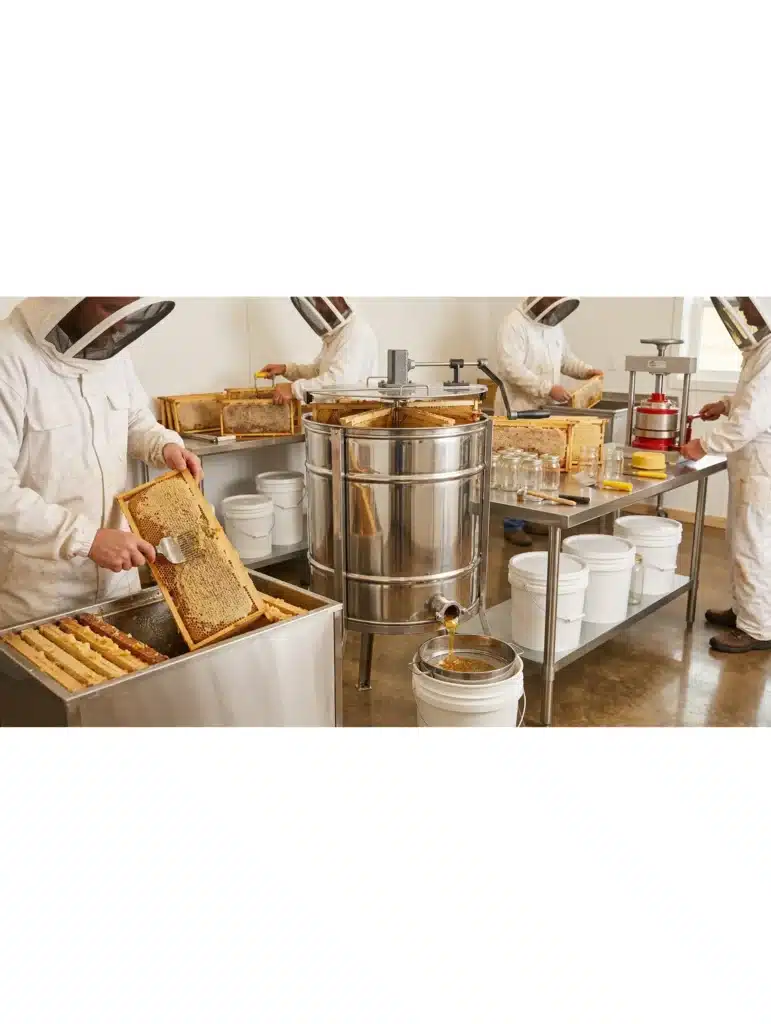
Mass-produced honey is often ultra-pasteurised, heavily filtered, or adulterated with syrups. These processes remove pollen and prevent crystallisation, but they also remove much of the nutritional value. At Frogmouth Ponds, we use cold-extraction and minimal processing specifically to preserve the quality and integrity of our honey.
What’s the Difference Between Raw Honey and Regular Honey?
Crystallisation happens naturally in raw honey because it retains all its original pollen and enzymes. Discover why raw honey is worth the investment and how cold-extraction makes all the difference.
Read the Article Understanding the difference helps you appreciate what’s in your jarExperience Crystallisation for Yourself
Each of our artisan honeys crystallises differently, reflecting its unique floral origin and glucose content. Try Leatherwood, Clover, or Blue Gum and discover your favourite.
Shop Now All Frogmouth Ponds honey is cold-extracted and minimally processed