From the Apiary · April 2026
Preparing for Winter:
Honey Out, Boxes In
Last frames pulled, stores checked, trees trimmed — and the workshop fires up for a season of building.
By Stewart Harry · Frogmouth Ponds, Port Sorell · 4 min read
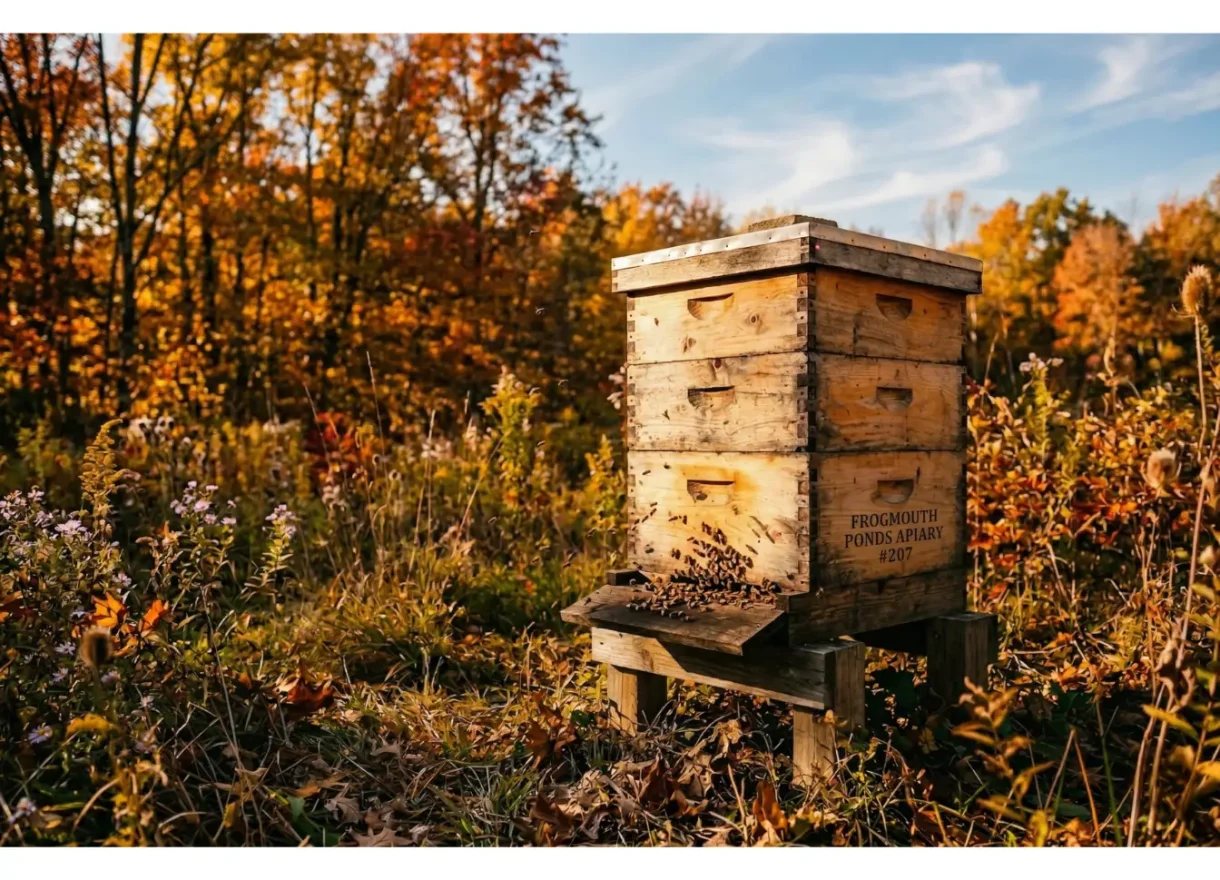
Autumn is the busiest season you never see coming. While the tourist trail is still chasing summer, we’re deep in the work of putting the apiary to bed — and setting ourselves up for a strong spring.
The Last of the Season’s Honey
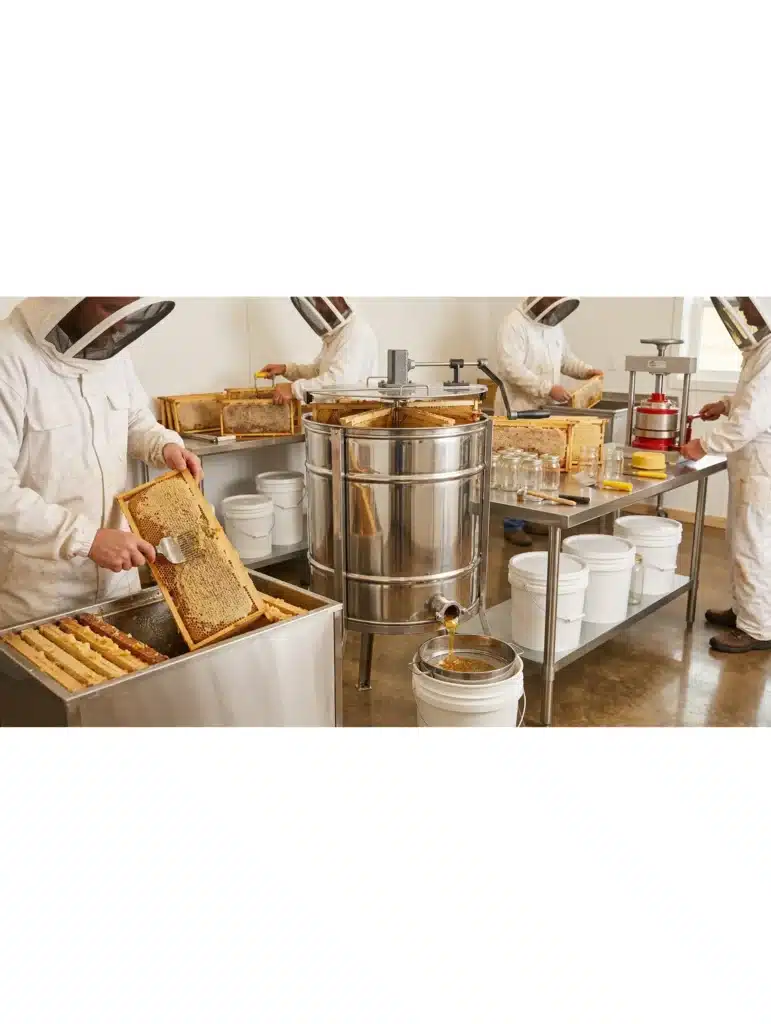
This week we pulled the remaining frames earmarked for extraction. We’re finishing out the season with two honeys: our Garden Blend from the Port Sorell apiary, and the last of the Stringybark from Acacia Hills. Both are beautiful — the Stringybark in particular has had an excellent run this year — and we’re looking forward to getting them bottled and onto the shelf.
Feeding the Bees Through Winter
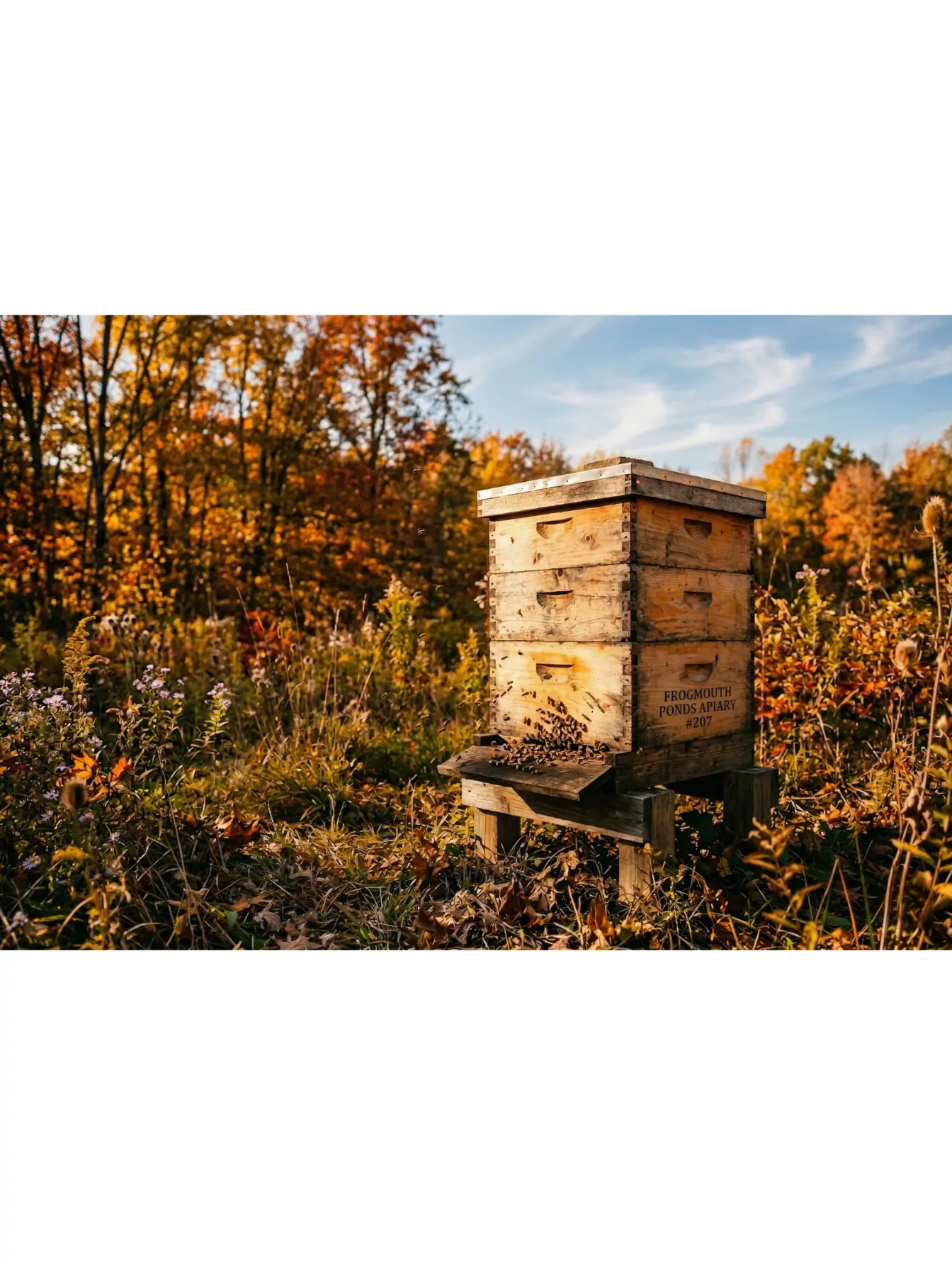
Once the supers come off, the priority shifts entirely to the colony’s survival. Our rule of thumb is straightforward: the bees need honey stores equivalent in volume to their brood box.
Our Winter Stores Standard
Brood Box to Honey Box — matched in volume
- 1Full depth brood box → one full depth super of capped honey
- 2Full depth brood box → one ideal super + one brood box equivalent
- 3Full depth brood box → one Manley super + brood box equivalent
We inspect each hive and confirm stores before we’re satisfied they’re set for winter. Under-resourced colonies don’t get a second chance — there’s no foraging to fall back on once the cold sets in.
Letting the Light In
One of the more satisfying jobs this time of year is getting the chainsaw and loppers out. Over summer, the trees around the apiary put on significant growth, and by autumn some hives are sitting in more shade than we’d like. We trim back anything that’s crept over the hive lines to make sure maximum winter daylight reaches the boxes.
Cold bees that can warm up on a sunny June afternoon are far better placed than cold bees sitting in shadow all day.
The Workshop Fires Up
With extraction done and the colonies tucked away, the workshop becomes our second apiary. Over winter we keep ourselves busy building — new brood boxes, frames, lids, bases, and whatever else the coming season is going to need. There’s something deeply satisfying about building the infrastructure for next year’s honey while this year’s is still being bottled.
What We’re Bottling Now
Three varieties from the 2025–26 season, each from a different part of the Tasmanian landscape.
Clover
Light, floral, and consistently popular. A reliable backbone of every season.
Stringybark
Bold and complex with a long finish. From Acacia Hills — one of our best seasons yet.
Blackberry
Dark and fruity with a distinctly Tasmanian character. Hedgerows and wild brambles in every jar.
Each variety is cold-extracted and bottled on-site at Port Sorell. No heat, no blending, no shortcuts. What goes in the jar is exactly what the bees made.
Follow along as we move through the quieter months — there’s more happening than it looks.
Now Available
Fresh Season Honey
from Port Sorell
Clover, Stringybark, and Blackberry — cold-extracted, single-origin, bottled on the farm. Limited quantities each season.
Stewart Harry
Beekeeper and co-founder of Frogmouth Ponds, Port Sorell. Stewart manages the apiary, oversees all production, and has been keeping bees long enough to know that winter prep is where the next season is won or lost.